Best SEO Company in Lahore for Local & International Businesses (2026 Guide)
September 14, 2026Read Post
Generative Engine Optimization (GEO) is the practice of optimizing content so generative AI systems ChatGPT, Gemini, Perplexity, Claude, and Google's AI Overviews can accurately understand, summarize, and cite it when generating answers. Where SEO optimizes for a ranked list of links, GEO optimizes for how your brand and content get represented inside an AI-generated response itself.
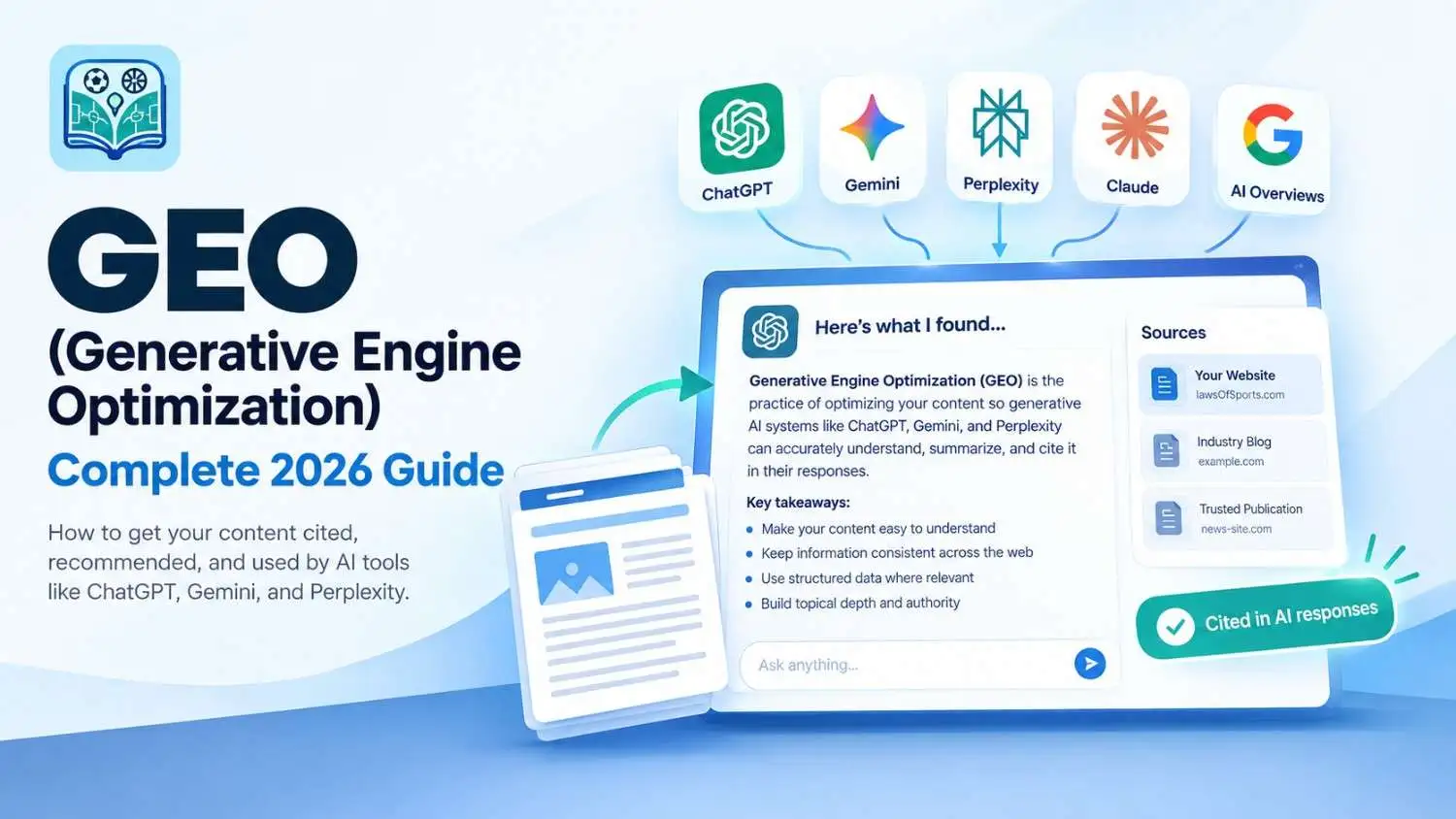
Search behavior has genuinely split. A large and growing share of queries now go through a generative AI interface instead of a traditional search box someone asks ChatGPT to compare two products, or asks Gemini to recommend a service, and gets a synthesized answer instead of ten blue links. If your content isn't structured in a way these systems can parse, understand, and trust, you're invisible in that entire channel, regardless of how well you rank on Google.
They overlap heavily, and in practice most agencies (RankNex AI included) treat them as one combined strategy. The subtle distinction:
AEO (Answer Engine Optimization) focuses specifically on being the direct answer to a question think featured snippets, voice search results, and AI Overviews that quote a source directly.
GEO (Generative Engine Optimization) is the broader practice of optimizing for how generative AI systems synthesize, summarize, and reference content across longer, more conversational answers not just single direct answers.
If AEO is about winning the specific answer slot, GEO is about how your content gets woven into the broader AI-generated response, even when it's one of several sources contributing to it.
Generative engines don't rank pages the way Google does. Instead, they retrieve and synthesize information from multiple sources to construct a response. What determines whether your content gets pulled into that synthesis:
Clarity and structure. Content organized into clear sections with direct statements is far easier for a model to extract and summarize accurately than dense, meandering prose.
Factual consistency across the web. If your business's claims, numbers, and positioning are stated consistently across your site and other mentions of you online, AI systems treat that information as more reliable.
Authoritative signals. Backlinks, citations, and mentions from other credible sources still matter generative engines lean on similar trust signals to traditional search, layered with their own retrieval methods.
Structured data. Schema markup gives these systems explicit, machine-readable facts instead of forcing them to infer meaning from unstructured text.
1. Write in clearly extractable chunks. Each section should be able to stand alone and make sense if pulled out of context because that's often exactly what happens when an AI system quotes or summarizes it.
2. Lead with the answer, then explain. State the key fact or conclusion first, then support it — this mirrors how these systems prefer to extract and present information.
3. Keep facts about your business consistent everywhere. Name, services, location, and key claims should match across your website, directories, and any other place you're mentioned online.
4. Use structured data aggressively. Organization, Article, FAQ, and Product schema (where relevant) all give generative engines explicit signals instead of requiring inference.
5. Build genuine topical depth, not scattered content. Systems performing generative retrieval favor sources that demonstrate comprehensive coverage of a topic over single, isolated pages this is also why topic clusters (grouped, interlinked content) tend to outperform standalone posts.
6. Monitor whether you're actually being cited. Periodically ask the major AI tools questions relevant to your business and see whether and how accurately — you show up in the answers. This is the GEO equivalent of a rank check.
GEO isn't a reason to abandon traditional SEO the two reinforce each other. A well-structured, authoritative page that ranks well on Google is also the type of page generative engines are more likely to retrieve and trust. The businesses getting ahead right now are the ones treating GEO as an extension of solid SEO fundamentals, not a separate, competing effort.
GEO is still early enough that most competitors in most industries haven't structured their content for it yet. That's a real, temporary window — the businesses that get their content genuinely AI-legible now have a real shot at becoming the default answer in their category before this space gets as crowded as traditional search.
What Is AEO (Answer Engine Optimization)? Complete 2026 Guide
AI Marketing Agency vs. Traditional Agency: What's Actually Different