Technical SEO Checklist 2026: Crawling, Indexing, Speed & Schema
October 13, 2026Read Post
Travel is one of the most research-heavy purchase categories online, and giant booking platforms dominate the obvious keywords. This guide shows how smaller travel businesses can win instead through niche destination expertise, detailed itineraries, practical planning content, and strong trust signals at every stage of the traveler's research journey.
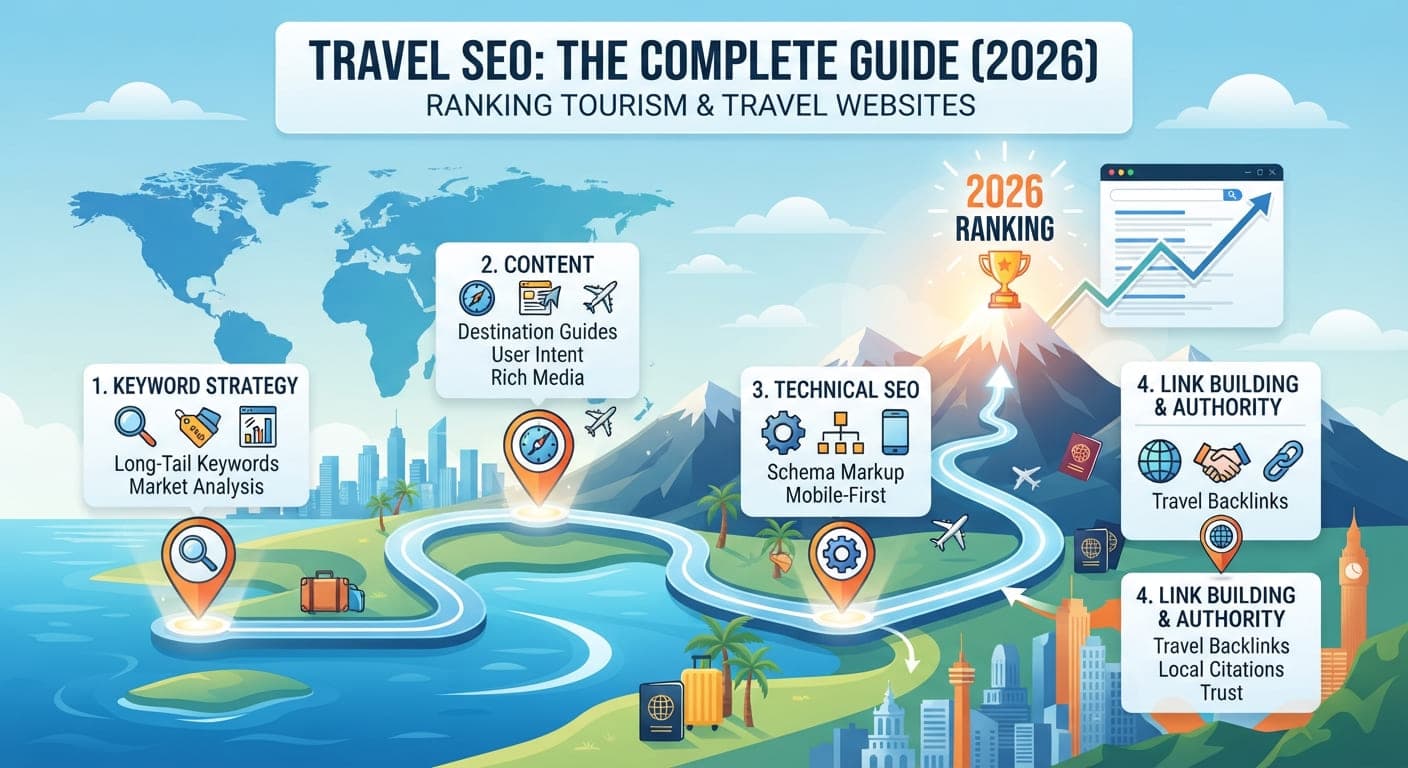
Travel is one of the most research-heavy purchase categories online. People spend weeks browsing destinations, comparing options, and reading reviews before they book anything. For travel agencies, tour operators, hotels, and tourism boards, that long research window is both the biggest challenge and the biggest SEO opportunity.
Large booking platforms and travel aggregators dominate the most obvious, high-volume keywords, "hotels in Dubai," "flights to London," "best tours in Istanbul." Competing head-on for these terms rarely makes sense for a smaller operator. The realistic opportunity lies in the thousands of more specific, intent-rich searches those giants don't serve well: niche experiences, local expertise, and trip-planning questions that need a genuinely knowledgeable answer.
Inspiration stage. Searches like "best places to visit in northern Pakistan" or "romantic honeymoon destinations" are broad and exploratory. Content here builds awareness and brand familiarity, even though immediate bookings are unlikely.
Research and planning stage. Searches like "7 day itinerary for Hunza Valley" or "how much does a trip to Turkey cost" show someone actively building a plan. Detailed, practical content captures this high-value audience.
Comparison and decision stage. Searches like "[tour operator] reviews" or "best guided tours in [destination]" show near-booking intent. Trust signals, reviews, clear pricing, verified credentials, matter most here.
Booking stage. Clear, easy-to-complete booking flows on a fast, mobile-friendly site decide whether intent actually converts.
Destination guides with genuine, first-hand expertise. Generic, aggregated destination content is everywhere. Guides reflecting real local knowledge, specific recommendations, honest tips, seasonal considerations, stand out and earn trust that generic content can't.
Detailed itineraries. Day-by-day itineraries answer one of the most common planning questions directly and tend to earn both traffic and backlinks from travel bloggers and forums.
Practical logistics content. Visa requirements, best time to visit, budgeting, transport options, and safety information address the unglamorous questions travelers actually need answered, and rank well because many sites skip them.
Experience and tour pages optimized individually. Each tour, package, or experience deserves its own detailed, well-optimized page with real photos, clear inclusions, honest descriptions, and transparent pricing, not a single long catalog page.
Seasonal and event-based content. Travel demand shifts heavily by season, festival, and holiday. Content planned and published ahead of those windows captures searches as they ramp up, rather than after the peak has passed.
A strong travel content strategy should connect these different resources through relevant internal links. For a deeper look at building connected content around search intent and topic clusters, see Content Marketing for SEO.
For physical locations, hotels, tour offices, travel agencies, Google Business Profile optimization remains essential. For tour operators and agencies serving travelers from other cities or countries, location-targeted pages (for example, "tours from Lahore" or "Pakistan tours for UK travelers") capture searchers based on where they're traveling from, not just where they're going.
For more on location-based search visibility, see Local SEO in Lahore: How to Rank in Local Search Results.
Booking travel involves real money, and often prepayment, with a provider the traveler may never have met. Reviews on Google, TripAdvisor, and relevant platforms are among the most influential factors in the decision. Responding to reviews, displaying verified credentials, and showing real photos from past trips all directly support both conversions and local search visibility.
Page speed on image-heavy pages, since travel content relies on photography but slow pages lose visitors quickly, especially on mobile
Mobile-first design, since a large share of trip research and even booking happens on phones
Structured data for tours, events, reviews, and organizations to qualify for rich results
Multilingual and multi-region setups handled correctly (hreflang tags) for businesses serving travelers from multiple countries
Competing only for broad, high-competition keywords against major booking platforms instead of targeting niche, specific, winnable searches
Thin, generic destination content that adds nothing beyond what a hundred other sites already say
Outdated pricing, availability, or travel information, which damages trust immediately
Neglecting content for the early research stage, missing the chance to build familiarity before competitors do
Weak or missing reviews, despite how heavily travelers rely on them
Travel SEO rewards businesses that bring genuine expertise to the research phase, specific destination knowledge, practical planning content, and visible trust signals, rather than trying to outmuscle giant platforms on generic keywords. The operators who help travelers plan well early tend to be the ones they remember and book with later.
Restaurant SEO: The Complete Guide to Getting Found by Hungry Customers
Healthcare SEO: The Complete Guide to Ranking Medical & Clinic Websites
Content Marketing for SEO: How to Build a Strategy That Actually Ranks
Get a Free Travel SEO Audit →
Get a comprehensive SEO & AI visibility audit for your website with zero obligation.